
Deciding When to Decide
Updated: May 6
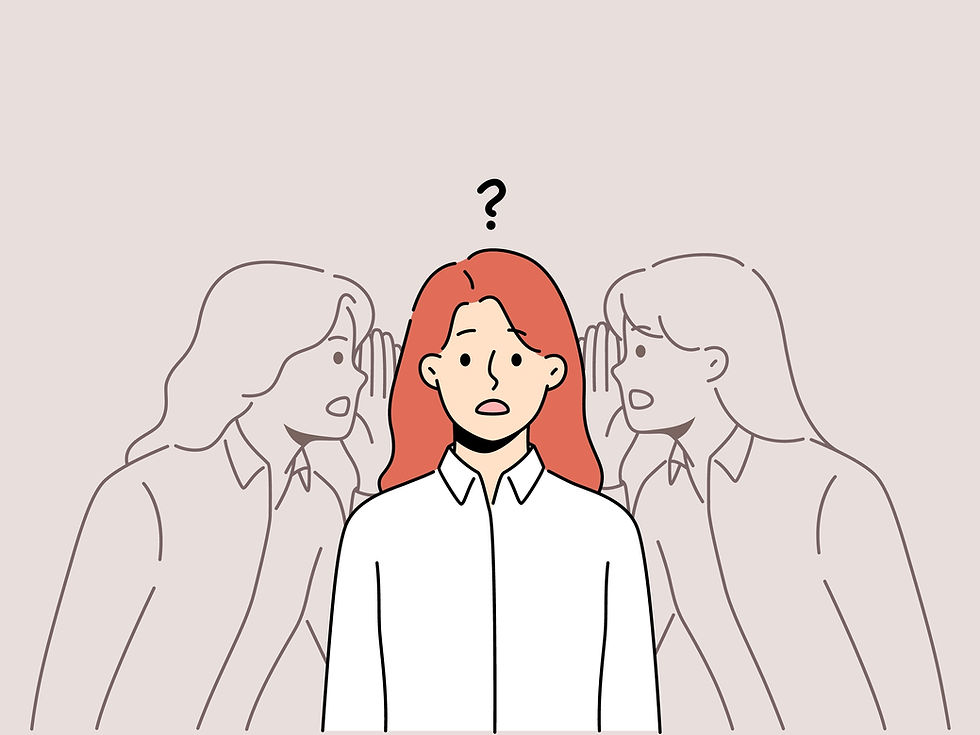
Many times in my leadership journey, I had cramped neck muscles from whipping around dazed and confused by certain reactions I would get.
One of the big offenders was post-decision critiques (which, of course, were rarely praise – but hey, that comes with the role, right?).
I found this incredibly frustrating. After framing bigger decisions for the team, getting input, giving updates, and then deciding I would hear one of two pieces of feedback:
You didn’t listen enough. We weren’t heard.
Or
You took too long to decide. You let this issue drag on too long.
As much as I had adopted the survival technique of taking this frustration in stride by letting it go during my morning meditation, I still wanted to get it “just right.” I wanted to make the decision where everyone felt heard enough and understood my decision, whether they agreed with it or not.
A wise mentor of mine once warned me that smart people can explain away anything to avoid taking responsibility for their part in creating an issue. So, rather than blame this on misaligned generational expectations, a lack of decision-making experience, or shockingly poor judgment, the braver choice was for me to embrace the issue as being mine (at least in part).
During my weekly reflections (my way of putting issues aside before the weekend and setting an intention for the coming week), I would sometimes ponder whether there was a better path:
Is there a different expectation I could set at the outset of a decision-making process that would lead to a more satisfying outcome for the team?
Is there an indicator I could observe that would let me know whether I’ve listened too long or not long enough?
Was I truly being authentic in my request for input or was the team inferring (maybe rightly?) that I was asking “just to ask?”
I knew a few things weren’t the (whole) answer.
town halls
shared documents for feedback
suggestion boxes (separate blog coming someday on why this is never the answer)
There was no noticeable change in the team’s reaction to decisions after trying all of that – further proof that I was perhaps fixing the wrong problem.
If there was a “right” way to do this, I hadn’t read about it, heard it from a colleague, or magically guessed it.
For a long time, I thought the solution was straightforward: listen broadly, take input seriously, and avoid rushing to judgment. If the team feels unheard, listen more.
That thoughtful, inclusive process, rife with space and good questions can still lead to the feedback that you weren’t really listening.
Thanks to my mentor, I tried personalizing the problem. Did I always feel heard after being asked what I thought or felt? For sure not. Therefore, listening a lot doesn’t translate to feeling heard.
I had a dawning awareness that people weren’t evaluating how much I had listened. They were evaluating one thing: whether they felt heard. And those are decidedly not the same thing.
Maybe it’s because so much talk isn’t “real” talk. It’s noise or deafening silence filling an unsafe space. The input we get isn’t what people genuinely think. It’s what they feel safe in saying.
So even when you listen a lot, you may not hear what matters.
One thing I had learned: when you can draw a line between the input you took in and your final decision, the odds of people feeling heard increase dramatically. If that line isn’t straight or has breaks in it, you have more explaining to do.
The length of the conversation and amount of input are not the relevant variables.
My fine-tuning of the process was the right instinct, for once – use the reaction to decisions to tweak the approach to the next one. And never expect blanket acceptance that the process was a good one. Everyone has different preferences (and some people experience not having gotten their way as having been unheard – meaning, “You didn’t do what I wanted you to do.”).
As is often the case, the catch is to admit what you can’t control (other people), take control of what you can (a stable and dependable process), and exert influence in those nooks and crannies that you find between the two.
So, I stopped trying to perfect how much I listened and focused instead on what happened after the decision. It all came down to one thing: ensure the path from input to decision was shared explicitly.
Over time, this crystalized into a few practices that made this process and its outcomes more reliable:
Close the Loop. When you share back with the team, draw the path from input to decision. Don’t assume everyone in the organization is experiencing this decision as deeply as you are. Many complex decisions can take months of input from many stakeholders. A little reminder will go a long way.
Connect the Dots. When you choose to act on input, don’t assume people will know. Some will. Some won’t. Thank people for their input and mention specifically where it showed up in your decision.
Follow Up No Matter What. The biggest pitfall is when you don’t act on the input you received. Still explicitly and specifically acknowledge the input and explain why you decided on a different direction.
Distinguish Between Not Now or Not Ever. When you are not acting on input, it can also help to be clear about whether this is “not right now” or a “not for the foreseeable future.” All good ideas have their time. Find a way to save good ideas and revisit them with the team periodically.
Share How the Input Still Helped. Some input may not be actionable, but it can expand our thinking as an organization. We may not take a certain action, but the input may help us sharpen the decision criteria, alert us to a risk, or clarify a necessary trade-off. Naming these benefits can broaden the experience of contributing to a decision beyond getting what any one person or group wants.
These follow-up moments aren’t just about managing reactions. They are how team members learn how decisions get made and an opportunity to show how other stakeholder input and organizational factors weigh heavily in the decision-making process. Whether a decision went their way is less important than the full picture.
Of course, no tactic guarantees agreement or anything close to it. But it does change the experience.
In my frustration and reflection, I internalized more deeply what I knew when I started. People may disagree with a decision, but my role was to help them understand it – to know that I was working to be inclusive, thoughtful, and disciplined in how I cared for the team and the organization. It wasn’t to convince myself that I was right and they were wrong.
Conflict-free total agreement doesn’t exist. Sometimes I listened for too long. Sometimes for not long enough. And most of the time, different team members disagreed about whether it was too fast or too slow.
The real issue was my owning my decisions and being willing to share transparently how I’d arrived at them (right or wrong).
Most people don’t expect you to act on everything they offer. They expect to understand how you decided and to see where their input mattered.
This is a topic I work on often with teams. Feel free to reach out if it’s showing up for you. You can email me at gary@garybagley.com or DM me on LinkedIn.


Comments